
Seville: Orange Blossoms and Intricate Architecture
Streets of Seville
I had wanted to visit Seville since watching Mission Impossible 2 back in 2000. In the movie, the city was depicted as vibrant and full of life and music, with beautiful architecture and rich cultural traditions. When I learned more about the Moorish roots of Andalusian Spain, my interest only grew stronger. I'm fascinated by places like this, where cultures came together and something uniquely beautiful was born.
When I finally got the chance to visit Seville in 2025, it was beyond what I had imagined. What I noticed first was the incredible scent of orange blossoms. It added a magical quality to the city that I had not experienced anywhere else before. Wandering around this city was a delight - around every corner, a new vibrantly tiled alleyway, a winding path under an intricate arch, the warm glow of a street lamp on buildings old and new.
The Almohad city
Seville has seen a lot over the course of its history. In the 12th century Seville was a capital of the Almohads, the dynasty that ruled much of North Africa and al-Andalus. They built a great mosque and a fortified river port in the city. When Castile took the city in 1248, the conquerors did not tear everything down. Seville kept what it conquered and built on top of it, and its most famous buildings carry both histories at once.

Giralda Tower at night
Seville, Spain
La Giralda by LamplightLa Giralda
One of the first places I visited was La Giralda, after tapas at Cervecería Giralda Bar just down the street. The mosque's minaret, completed at the end of the 12th century, survived the building of the cathedral that replaced the mosque, one of the largest Gothic churches in the world. In the sixteenth century a Renaissance belfry was raised on top, crowned by the bronze weathervane, the Giraldillo, that gives the tower its name. Inside, ramps rather than stairs climb to the top, said to be wide enough for a rider on horseback. By night the old brick burns amber above the lamps of the square. It's really something to see.

A beacon of light on the Guadalquivir
Seville, Spain
Golden Tower at MidnightThe Torre del Oro
I was staying on the other side of the Guadalquivir, so my path back took me to this unique monument right on the river. The Almohads raised a 12-sided watchtower in the early thirteenth century to guard the river harbor; a chain could be drawn across the water from its base. Its name, the Tower of Gold, is said to come from the way its walls shone on the river. Today it houses a small naval museum, and at night the floodlights really make it live up to its name.
The Real Alcázar
I had been very much looking forward to seeing the Alhambra in Granada, but little did I know, Seville had a palace that would rival it. Fortunately, I had booked an early morning tour, which included free roam of the expansive palace and gardens. The optional guided tour of the upper level is a must-see - the architecture is simply unparalleled.

Courtyard of the Maidens in Real Alcázar
Seville, Spain
Courtyard of the MaidensYes it's real - but in this case, Real means royal. The upper rooms are still used by the Spanish royal family, which makes the Alcázar one of the oldest royal palaces in use in Europe. In the 1360s Pedro I of Castile built this palace inside Seville's fortified Alcázar, using craftsmen from Granada and Toledo who worked in the Mudéjar style: Islamic forms made for a Christian king. Its heart is the Patio de las Doncellas, the Courtyard of the Maidens, with a long pool between sunken gardens and a Renaissance gallery added above. The cathedral, the Alcázar and the Archivo de Indias have been a UNESCO World Heritage Site since 1987.
Visiting
Book the Alcázar ahead and go early, and don't miss the guided tour of the upper levels - it's worth the wait. Climb the Giralda in the late afternoon and grab some local tapas. Book a relaxing visit to Aire Ancient Baths and unwind from all the walking. Stop by the Torre Del Oro at night and enjoy the peaceful Guadalquivir. Treat yourself to a pastéis de nata at De Nata, which offers multiple locations throughout Seville and beyond. Spring offers the full orange blossom glory, but autumn is another great time to visit. Summer in Seville is among the hottest in Europe.
Tags
About the photographer
Michael Rory McCracken
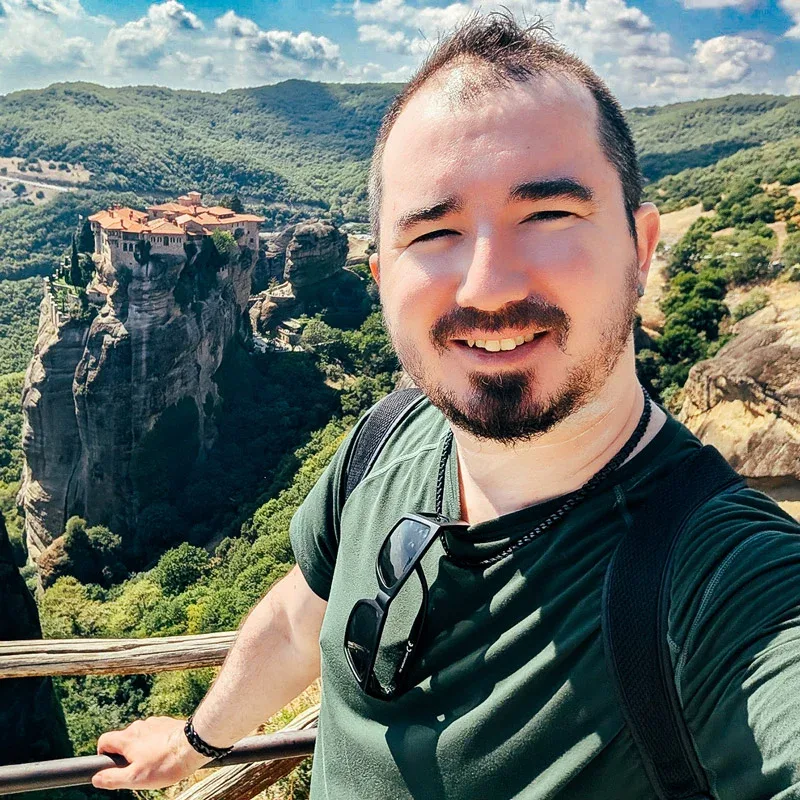
I've been fascinated by the ancient world since I was a kid, and I've spent twenty years photographing ruins, temples and wild places, from Cambodia to the Scottish Highlands. Lost Meridians is where those photographs live. I'm also the owner of Wild Glow, a web development studio.
More from The Journal
All Entries →
Cappadocia
Cappadocia: A Journey to Another World
Fairy chimneys, rock-cut churches and abandoned cave villages in the volcanic heart of Turkey.
Read Entry →
Angkor
Angkor: The Temples at one with the Forest
A journey from Thailand to Cambodia, to visit the Khmer temples outside Siem Reap, from Angkor Wat to Banteay Srei, to the forest-held ruins of Ta Prohm.
Read Entry →
Athens
Athens: My one-day marathon tour
A short stay in Athens, visiting the Parthenon, the Ancient Agora, the Temple of Hephaestus, Syntagma, Monastiraki and other highlights.
Read Entry →